Photo Credit: VistaCreate
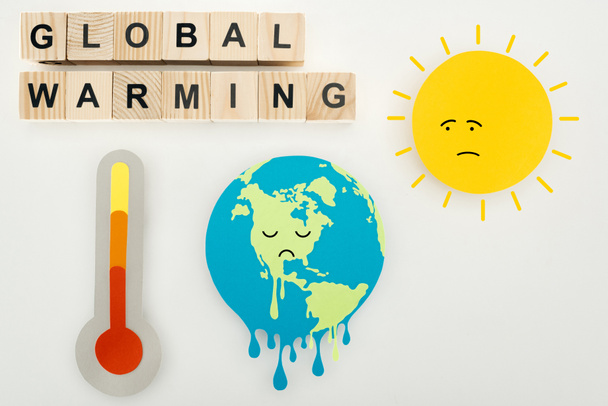
The Earth awoke one morning feeling warmer than usual. She touched her forehead and realized she had a fever. She thought it would go away soon, so she gave herself some time to rest.
Her body parts were impacted by this fever. The heat was causing her glaciers to drip droplets of water at an alarming rate. Her seas began to rise from the influx of lost ice, spreading out further upon her shores.
Some of Earth’s animals started feeling the heat. The polar bears clung to drifting ice chunks as their icy terrain melted into cold ocean. Birds flew north to forests they had never seen that were once tundra. Some of her animals actually disappeared, and their friends wondered where they went.
The fever fiercely gripped forests now too, drying out the woodlands. Her fever burned forests that were once so vast with trees that stood so high.
The Earth wondered why this was happening to her. She longed for the pleasant predictable seasons she had enjoyed for so long, and the beautiful diversity her land had to offer. The Earth feared what she might become if this fever did not break.
Later that day The Earth decided to check her temperature, as she was curious how high her fever really was. She learned that she was only three degrees Fahrenheit higher than she usually is, but she feels so different than usual. How could this be?
—————
I decided to write this in response to the comments people make about how three degrees will not make a difference in the homeostasis that has been maintained on Earth since the beginning of time. I used the fever analogy to put into perspective what three degrees really is. In the human body, three degrees higher than our normal body temperature would cause us to have a fever, leading to us humans feeling sick. It is the same for Earth. She has a fever.
 The GreenPrint
Leave a comment